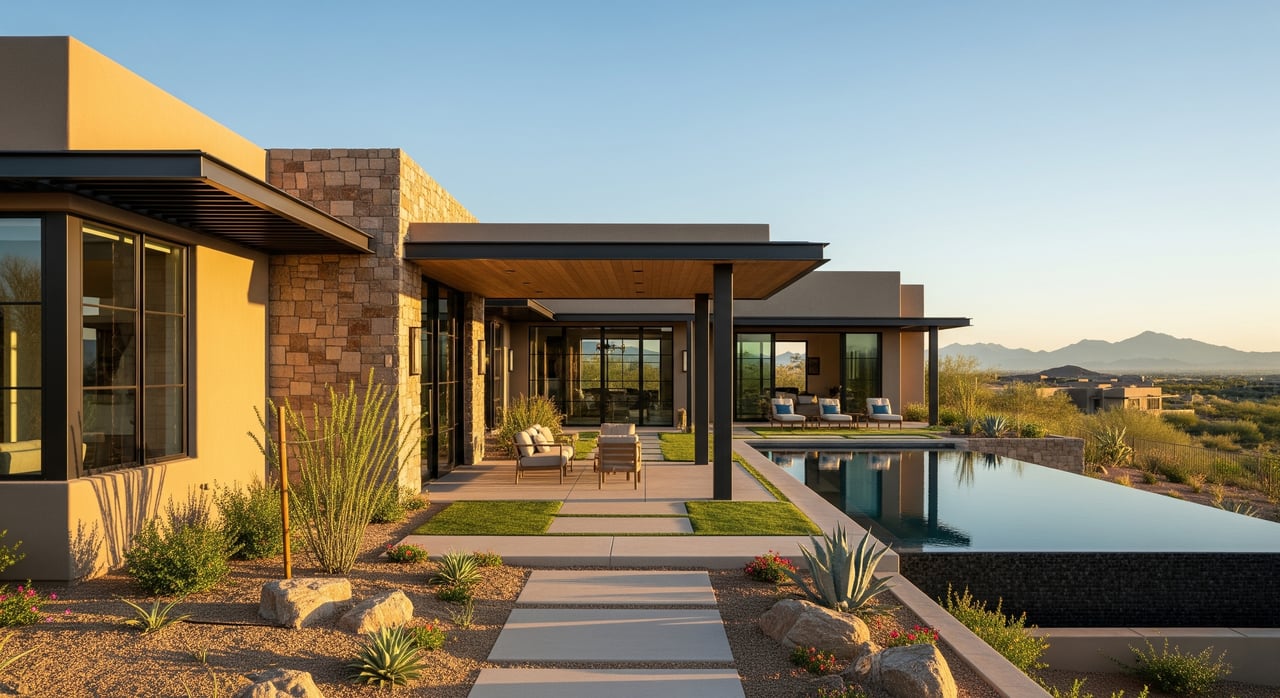
You can build a stunning North Scottsdale home, but if you overlook ESLO rules, your project can stall fast. Between NAOS, wash protection, color limits, and lighting standards, the details matter from day one. This guide gives you a clear builder’s checklist rooted in City of Scottsdale requirements so you can design smart, permit smoothly, and pass inspections. Let’s dive in.
Know your overlays and constraints
The Environmentally Sensitive Lands Overlay sets the baseline for much of North Scottsdale. It requires permanent Natural Area Open Space on each lot and protects washes, native plants, and scenic landforms. Review the City’s overview and NAOS resources on the ESLO page before you sketch.
If your parcel is in the Foothills Overlay, you will also see rules that preserve rural desert character. These include wall alignment and visual-impact standards. Confirm whether your lot is subject to the Foothills Overlay.
NAOS minimums vary by slope and landform. For example, in certain upper-desert slopes between 10 and 15 percent, the minimum can be 45 percent. Always verify your NAOS percentage using the ESLO tables on the City site.
Map your site before you design
Start with parcel research and a topographic survey. Identify landform categories, slopes, recorded NAOS easements, and any washes on or near the site. If a wash carries a 100‑year flow of 50 cfs or more, a formal wash‑modification process and floodplain compliance apply under the City’s design standards and policies.
Plan a pre‑application meeting with Current Planning for any proposed wash crossing, NAOS change, or major grading. Early feedback reduces redesigns and keeps your schedule realistic.
Fix the development envelope
Define your buildable pad, driveway alignment, utility routes, and the exact limits of disturbance. Rope off NAOS areas on your plan and on site. Inspectors will look for this at the Pre‑Site (42) visit per the City’s site inspection checklists.
Choose finishes that pass ESLO
Exterior colors in ESLO landforms must have a Light Reflectance Value of 35 percent or less, with Munsell value and chroma limits. This includes stucco, stone accents, roof trim, and visible utility equipment. Document manufacturer LRV and test swatches in direct sun. Color and visibility rules are enforced at final site inspection under the City’s ESLO design standards.
Protect washes and manage stormwater
ESLO favors leaving washes in place. Any modification or crossing must show no downstream harm and meet Chapter 37 drainage criteria. Coordinate grading and drainage with a civil engineer and show on‑site retention, erosion control, and restoration where needed. Wash, wall, and crossing standards are outlined in the City’s policies and standards.
Respect native plants and landscape rules
Scottsdale protects major native plant specimens. If construction affects them, you need an inventory and often a permit or salvage plan. Use the City’s Indigenous Plant List for NAOS and visible areas, and limit turf to enclosed yards as required. Start with the City’s guidance on native plants in ESLO. If salvage or permitting is needed, review the Native Plant Permit application.
Plan lighting for the night sky
Exterior lighting must be low‑scale, fully shielded, and directed downward. Provide cut sheets and photometrics in your plan set. Night‑sky standards are enforced and described in the City’s ESLO design standards.
Align with building and green codes
Scottsdale has adopted the 2021 IECC and related green provisions. Expect energy compliance documentation, solar‑ready roof zones, and cool‑roof or SRI measures where applicable. Coordinate building orientation, glazing, shading, and HVAC early to meet code and design goals. See the City’s building codes and energy requirements.
Use water‑smart rebates and xeriscape
The City has offered residential turf‑removal rebates, often up to 2 dollars per square foot with typical maximums around 5,000 dollars, subject to program changes. Pre‑approval is usually required. Check current details through the City’s program updates and pair your design with indigenous plant palettes from the native plants guide.
Your ESLO builder checklist
Study and pre‑application
- Pull ESLO and NAOS maps and confirm any recorded NAOS easements or plat stipulations on your parcel. Start at the ESLO page.
- Commission a topographic and slope survey plus a hydrology check to flag washes at or above the 50 cfs threshold. Review the City’s wash and drainage standards.
- Schedule a pre‑application meeting for any wash crossing, NAOS relocation, or hillside grading.
Design decisions before submittal
- Finalize the development envelope with minimal disturbance and show NAOS rope‑offs on plans. See site inspection requirements.
- Select exterior colors and materials with LRV 35 percent or less and keep documentation ready for review. Standards are in the ESLO code section.
- Prepare a landscape plan using the City’s Indigenous Plant List and complete the native plant inventory. Start with native plant guidance.
- Provide a shielded, down‑lighted exterior lighting plan per ESLO.
- Complete civil grading and drainage plans showing on‑site retention and no adverse off‑site impacts. If modifying a wash, include alternatives considered and a restoration approach.
Permits, inspections, and construction tips
- Submit building, grading, native‑plant, and NAOS documents together when possible. Schedule the Pre‑Site (42) inspection before any ground work and the Final Site (31) before your final building inspection, per City inspection services.
- Coordinate early with utilities on transformer or equipment locations and screening or color compliance. Visible equipment must meet LRV and concealment rules in the ESLO standards.
- Add contingency time and budget if wash modification, NAOS removal, or hardship exemptions are involved. Case files show extended reviews for complex hillside projects, such as those in the City’s public case records.
Common pitfalls to avoid
- Skipping early NAOS and native plant verification.
- Picking exterior colors without confirmed LRV and Munsell values.
- Underestimating wash regulation and flood criteria at the 50 cfs threshold.
- Starting turf removal before rebate pre‑approval.
Guidance for luxury buyers and sellers
If you plan to buy a North Scottsdale lot, due diligence on ESLO, NAOS, slopes, washes, and utilities can shape design, cost, and timeline. Request NAOS easements, survey data, and any prior stipulations before you commit. If you plan to sell, organizing ESLO compliance documents, approved landscape plans, and inspection records can increase buyer confidence and shorten negotiations.
For tailored help with lot selection, due diligence coordination, and strategy for high‑end builds and resales in North Scottsdale, connect with Racquel Miller. You will get discreet, concierge‑level guidance backed by local expertise and global reach.
FAQs
What is ESLO in North Scottsdale and why does it matter?
- ESLO is an overlay that requires permanent NAOS, protects washes and native plants, and sets appearance standards that can affect siting, grading, finishes, and lighting. Start with the City’s ESLO overview.
How much NAOS do I need on my Scottsdale lot?
- NAOS minimums depend on slope and landform. Some upper‑desert slopes between 10 and 15 percent can require 45 percent NAOS. Verify your category on the City’s ESLO page.
Can I reroute a wash on my property in Scottsdale?
- Only with a formal wash‑modification process and engineering that shows no downstream harm, especially for 100‑year flows of 50 cfs or more. See the City’s wash standards.
What exterior paint colors are allowed under ESLO?
- Exterior colors must have LRV of 35 percent or less and meet Munsell limits. These rules apply to visible surfaces and equipment per the ESLO code.
Which inspections are required for ESLO projects?
- The City conducts a Pre‑Site (42) inspection before ground disturbance and a Final Site (31) before final building inspection. Inspectors check NAOS protection, native plants, paint LRV, lighting, and screening per inspection services.
Are there Scottsdale rebates for turf removal?
- Yes, the City has offered turf‑removal rebates that often pay up to 2 dollars per square foot with typical caps around 5,000 dollars. Programs change and usually need pre‑approval, so review current City updates.