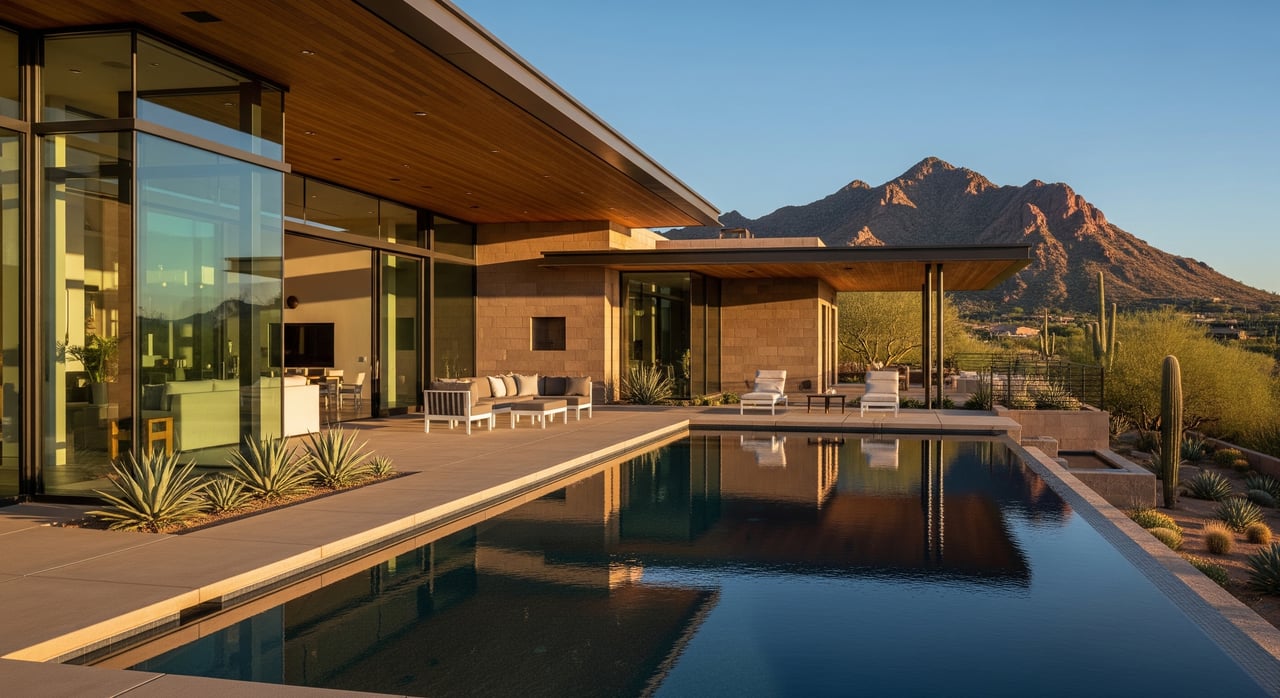
Are you weighing how to price your Paradise Valley home so it moves without leaving money on the table? In a luxury market with unique lots, views, and architecture, guessing can cost you both time and equity. You can use listing analytics to read demand and set a confident price that reflects real buyer behavior. Below, you’ll learn the key metrics, how to interpret them, and a step-by-step plan tailored to Paradise Valley. Let’s dive in.
Why analytics matter here
Paradise Valley is a highly specialized market with diverse estate styles and amenities. That variety means you must compare like with like and watch live signals from buyers, not just headline prices. Seasonality plays a role as well, since winter and early spring often bring more activity from second-home and out-of-state buyers. Use analytics to align your pricing with what qualified buyers are doing right now.
Core tools and metrics to track
MLS comps and pricing baselines
Start with a detailed CMA from Arizona Regional MLS. You are looking for recent luxury sales that match lot size, views, elevation, outdoor amenities, and architectural quality. Review days on market, list-to-sale price ratios, and current inventory in your price band. For local transaction and inventory data, reference the Arizona Regional MLS market resources at ARMLS.
Showing data and engagement
Showings are the clearest sign of in-market demand. Track requests and completed showings weekly through platforms like ShowingTime, and use their Showing Index trends for context. Combine showing counts with buyer-agent feedback to understand value perception and barriers to offers. Look for conversion from online interest to tours, since that is where commitment shows up.
Portal attention versus real demand
Online views and saves tell you how much attention your listing attracts, but showings are the stronger commitment signal. If you see high pageviews but few tour requests, you may have a pricing or positioning gap. Use your agent’s reporting to separate curiosity from intent. Treat portal reach as awareness and showings as readiness.
Supply, absorption, and timing
Ask your agent to calculate months of inventory for the luxury tier in Paradise Valley and to compare active listings with sales in the last 90 days. A tighter absorption rate supports firmer pricing, while higher inventory can require sharper positioning. For broader context on market conditions and buyer behavior, consult national resources from the National Association of Realtors.
Read the signals in the first 30 days
Low views and low showings
This suggests the right buyers are not seeing the property or your presentation is not connecting. Audit photography, headline, and listing copy, and confirm distribution to luxury channels before touching price. Ask your agent to push through broker networks and qualified buyer lists. Make the marketing match the property’s true value drivers.
High views but few showings
This pattern often points to a perceived value issue. Buyers are intrigued but not motivated to tour at the current price or based on what they see online. Validate price with fresh comps and request targeted feedback from agents who clicked or inquired. A small, well messaged price adjustment or sharpened value story can unlock tours.
Steady showings but no offers
If buyers tour and do not write, look for friction points. Common themes include condition mismatches, layout questions, or terms that limit flexibility. Gather and log feedback after every showing to spot repeat objections. Consider strategic incentives or a mild price reposition if a single theme keeps appearing.
Mid-course moves at 30 to 60 days
Relaunch strategy
If traffic declines and days on market grow, refresh the experience. New photography, updated copy, and a clear relaunch plan can restore momentum. Your agent can time the relaunch to coincide with email campaigns and private broker previews. Create a reason for buyers to take a second look.
Smart price repositioning
Use precise reductions when the data shows a gap. Small, targeted cuts of 1 to 3 percent test responsiveness without signaling distress. If a larger move is necessary, pair it with a full marketing relaunch and a clear narrative about the new value. Avoid multiple small cuts over long stretches, since that can erode perceived worth.
Turn analytics into a pricing workflow
Pre-list baseline
- Run a detailed CMA with Paradise Valley luxury comps from the last 6 to 12 months.
- Pull luxury absorption rate, active versus sold counts, and list-to-sale ratios from ARMLS.
- Agree on a pricing band and objectives: speed, maximum price, or discretion.
Launch and capture
- Track portal views, saves, and inquiries daily to weekly.
- Log showings through ShowingTime each week.
- Collect buyer-agent feedback after every tour. Categorize by price, condition, layout, or access.
- If you are running advertising, monitor web traffic patterns in Google Analytics and review lead quality.
Decision points
- At 14 to 30 days, act on the signals. If views are strong but showings are light, review price and presentation. If activity is soft in both areas, expand distribution and relaunch marketing.
- At 30 to 60 days, if offers are still absent, consider a planned price reposition with fresh creative and new audience outreach.
Ongoing cadence
- Re-run your CMA every 30 to 45 days and document the rationale for any changes.
- Maintain a prospect list from inquiries and follow up after each relaunch.
- Review metrics with your agent weekly at the start, then biweekly or monthly as appropriate.
What to monitor weekly
- Pageviews, saves, and contact clicks.
- Showings requested and completed.
- Buyer-agent feedback themes and frequency.
- Local luxury inventory shifts and new closed comps.
- Campaign performance if advertising is running.
How to weigh the metrics
For Paradise Valley luxury, give the most weight to showings, offers, and verified buyer feedback. Portal reach is helpful but can be noisy, especially with a smaller high-end buyer pool. Price decisions should reflect the balance of demand, inventory, and recurring objections. Use analytics to protect your time and your outcome.
Seasonal timing tips
Expect stronger luxury activity in winter and early spring, with a slower showing cadence in the hottest months. If you must list in summer, set expectations for lower traffic and a longer evaluation window. Plan content refreshes and outreach to maintain momentum. Timing can be a tool when paired with pricing discipline.
Partner with a concierge, data-first advisor
Your home deserves a pricing strategy backed by clear metrics and elevated marketing. With Sotheby’s reach, hyperlocal expertise, and measured reporting, you can make timely, confident decisions. If you want a private, analytics-driven plan for your Paradise Valley home, connect with Racquel Miller.
FAQs
Paradise Valley luxury pricing timeline for reductions
- For high-end listings, evaluate weekly and make first strategy changes around 14 to 30 days, then reassess pricing or terms at 30 to 45 days if offers have not materialized.
Expected showings for a Paradise Valley luxury home
- Expect fewer total showings than mass-market homes and benchmark against recent local luxury comps your agent provides rather than national averages.
Impact of price cuts on final sale in luxury
- Repeated small reductions over long periods can weaken perception, while one well-timed, transparent reposition paired with a marketing relaunch often performs better.
Trusting showings versus portal views when pricing
- Treat portal metrics as awareness and showing appointments as commitment, and give more weight to showings and buyer-agent feedback when making price decisions.
Using showing analytics to justify premium pricing
- Targeted campaigns can increase qualified tours, but the best support for a premium price is sustained showing activity that converts to offers combined with aligned local comps from ARMLS and showing trends from ShowingTime and market context from NAR.